
CDN & Caching
Content delivery and caching controls.
BasisCloud Web capability
Manage caching, delivery settings, and related website controls in the same platform path where your website is hosted.
CDN and caching are available for websites hosted on BasisCloud Web. Instead of treating content delivery, caching, domains, and related website settings as separate services, the platform brings these controls closer to the website itself.
From the cache management area, authorized users can adjust cache settings, change retention periods, purge cached content, manage cache invalidation and Cache-Control settings, and view or change cache status. The goal is simpler operational control over how website content is delivered - without making absolute claims about speed, security, or availability.
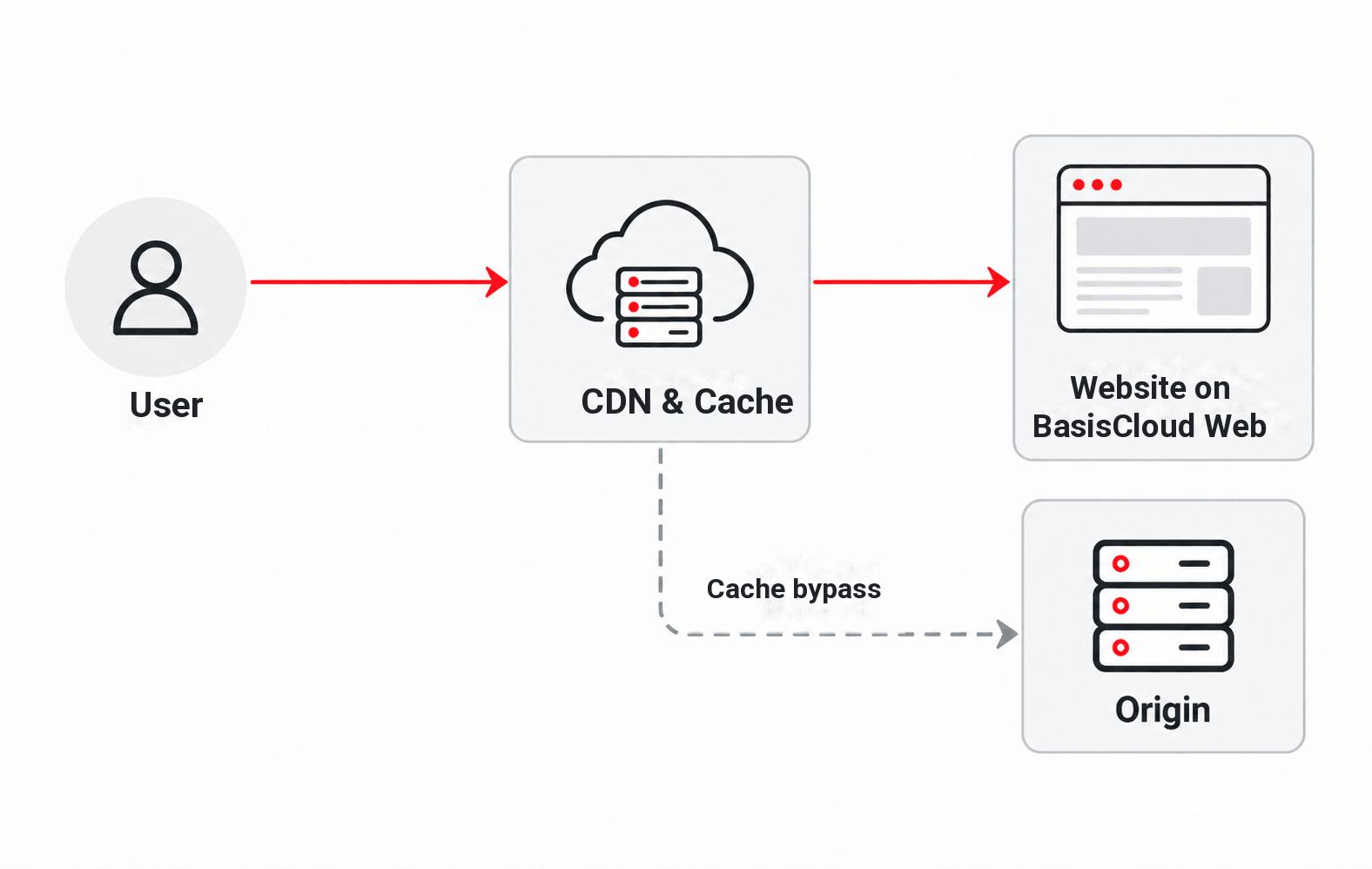
Manage delivery controls as part of the website platform, rather than as another disconnected service.
CDN creates more value when it is part of the website delivery architecture rather than an isolated add-on. In BasisCloud Web, CDN, caching, domain management, and related technical settings sit within the same managed website path.
This gives IT and web teams a more controlled way to handle everyday delivery settings without moving between several unrelated tools and providers. Cache configuration, domain settings, access levels, and service status can be managed closer to the website they affect.
The scope is intentionally clear. BasisCloud Web is designed to cover standard and professional company-website needs within its supported architecture. Specialist delivery, security, or network requirements should be reviewed as a separate technical scope.
Not every request needs to follow the same delivery behavior.
When a user requests a page or file, the applicable cache rule determines whether the content can be served from cache or should be retrieved from the origin website.
Content that is suitable for caching can be retained and reused through the delivery layer. Content that should not be cached can follow a bypass path and be retrieved from the origin instead.
The customer manages the website, domain scope, and cache settings from the platform. Network delivery decisions are handled by the infrastructure, so teams do not need to select a route manually for each request.
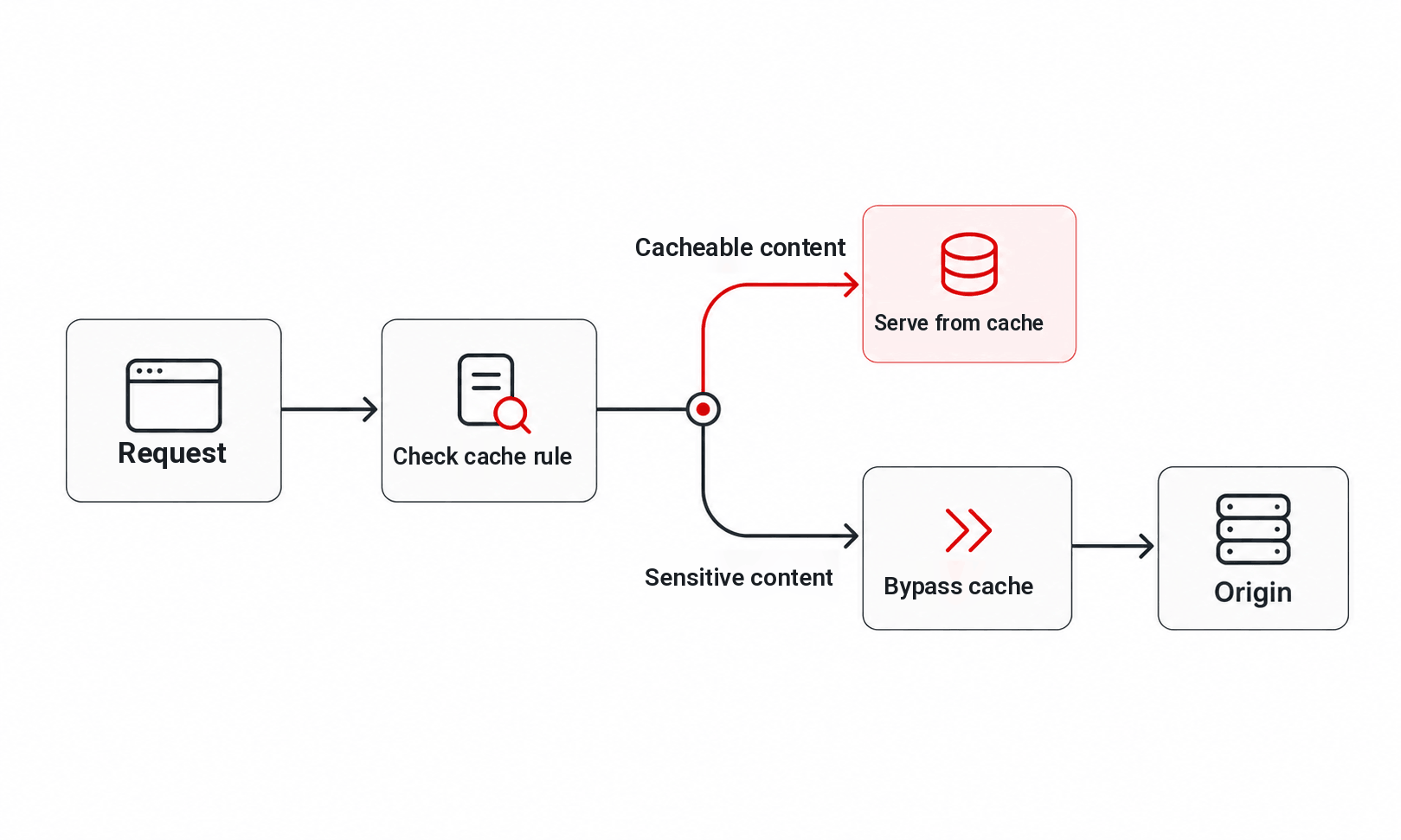
A user requests a page or website asset.
The relevant cache rule is checked.
Cacheable content can be delivered from cache.
Bypassed or uncached content is retrieved from the origin.
Authorized users can review and adjust cache settings from the panel.
Website files can have cache settings without forcing one policy across the entire site.
Website files can be assigned cache settings according to how they should be delivered. Static assets such as CSS, JavaScript, images, fonts, and downloadable files are common examples of content that can benefit from caching.
Public pages or responses that are not user-specific can also be managed with an appropriate rule. Personal, sensitive, or session-dependent areas should be handled more carefully and can be configured to bypass cache when required.
Rules can be applied to relevant URLs, paths, folders, or content groups so teams can manage different parts of the website with different delivery behavior.
Manage retention, purge, invalidation, and cache behavior from the same operational area.
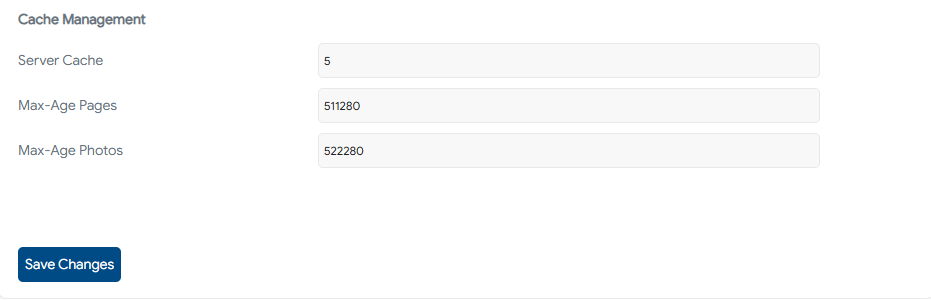
Cache management is handled from the panel. Authorized users can adjust retention periods, change caching rules, and define exceptions for content that should not be served from cache.
Cached content can also be purged when needed. Teams are not limited to treating the entire website as one cache unit; cache behavior can be managed selectively for the relevant content or path.
Cache Invalidation and Cache-Control settings are part of the same management path. Cache status is visible and can be changed by the customer, subject to the access permissions assigned to each user.
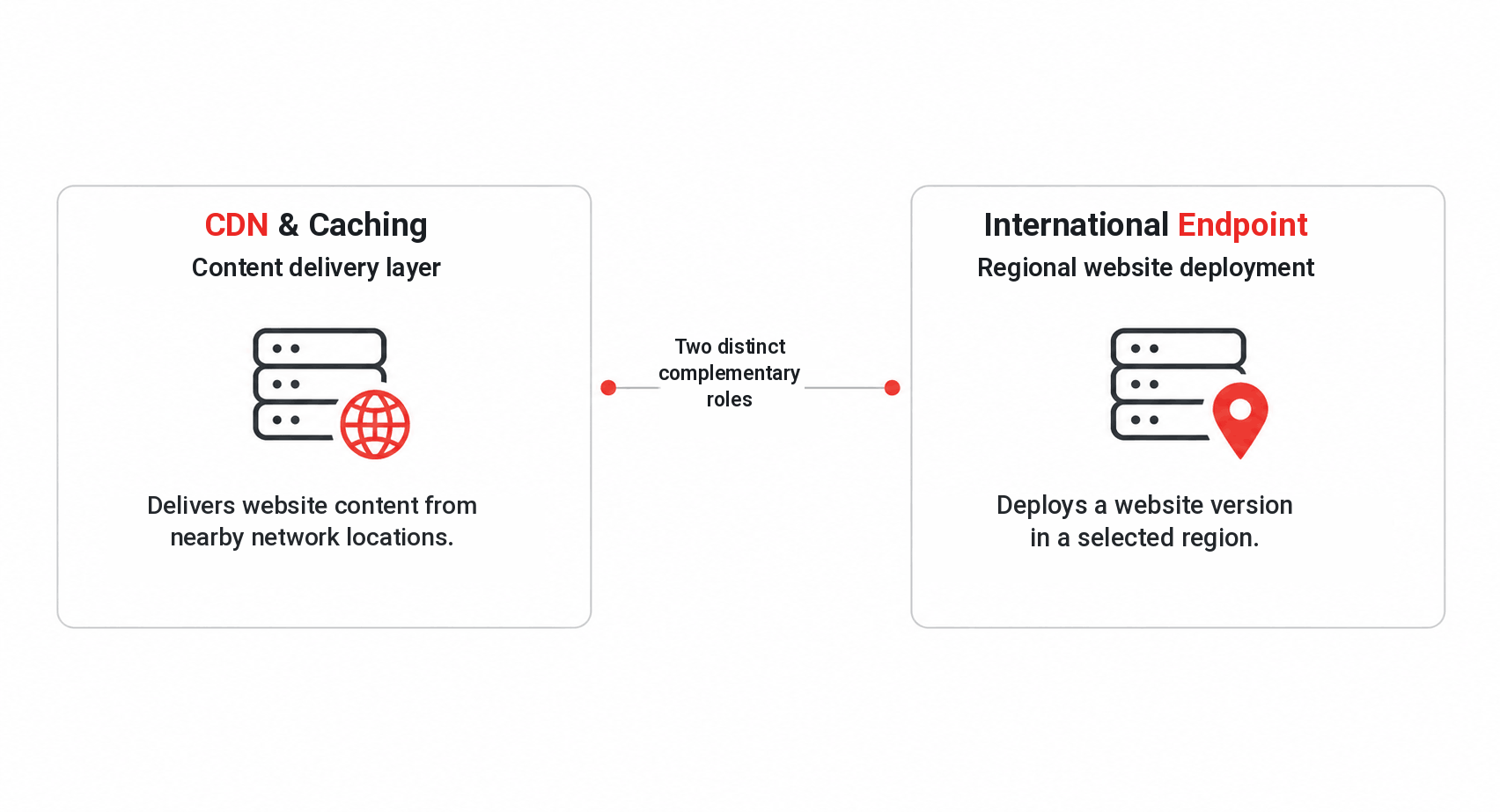
One manages content delivery; the other extends where a website version is deployed.
CDN is the content-delivery and caching layer. An International Endpoint relates to a regional deployment or website version. The two capabilities therefore have different roles.
A website can use CDN without treating an Endpoint as the same service. Where a regional deployment is needed, CDN and an Endpoint can work together as complementary parts of the architecture.
If your main requirement is a regional website version, international accessibility, or a separate deployment path for a target market, the International Endpoints page is the more relevant next step.
Content delivery and caching controls.
Regional website deployment or website-version path.
CDN is one part of website security and delivery architecture - not a replacement for every security control.
BasisCloud Web includes SSL within its website infrastructure, and access permissions can be used to control who is allowed to change CDN and cache settings. Cache rules can also be structured so sensitive paths are not treated like ordinary public assets.
Website security still depends on the wider architecture. The origin environment, user accounts, sensitive data, secrets, and any custom cache rules need to be managed appropriately for the website and its risk profile.
CDN and caching should not be positioned as a substitute for origin hardening, specialist backup, a web application firewall, or a complete organizational security program. The level of protection depends on the active architecture, configuration, and service scope.
Website delivery depends on the domain path, so CDN should not be treated as isolated from DNS and domain management.
CDN setup depends on the website domain and the way traffic reaches the hosted website. BasisCloud Web therefore places domain and DNS management within the wider website architecture rather than treating them as unrelated technical tasks.
This page focuses on CDN and caching. If your main requirement is record management, domains, subdomains, or DNS configuration, the dedicated Domains, DNS & Subdomains page provides the more focused path.
Start with the level that matches your current needs and move up when capacity or control requirements grow.
BasisCloud Web is offered in three service levels. Customers can choose the level that fits their current website requirements and upgrade when additional capacity or capabilities are needed.
The base level includes core website-management capabilities such as dedicated DNS, DNS management, change history, domain management, access control, caching, and CDN compatibility. Other platform capabilities may also be available as part of the broader BasisCloud Web service, but this page keeps the focus on what directly supports CDN and caching.
Numeric limits, traffic allowances, service quotas, and prices are not stated on this page unless they come from the current official source of truth. For questions about service levels, capacity, or commercial terms, the approved next step is to speak with Sales.
CDN works best when the website, domain, and cache policy are managed as one defined architecture.
The CDN and caching capability described on this page is for websites hosted on BasisCloud Web. The starting point is therefore an active website within this hosting path and a domain setup that can be managed as part of the service.
Teams should also identify which parts of the website are appropriate for caching and which should continue to be retrieved from the origin. Cache rules affect what users receive, so they should be aligned with the behavior of each website area.
If your architecture needs a regional Endpoint, specialist security controls, unusual capacity, or configuration outside the standard service path, that scope should be reviewed before implementation.
The capability described on this page is for websites hosted on BasisCloud Web. The website and its domain path need to be managed within that platform architecture.
Yes. Website files can have cache settings, and different parts of the website can be managed with different cache behavior. Static assets are common caching candidates, while personal, sensitive, or session-dependent areas should be handled with appropriate bypass rules.
Cache management is handled from the panel and can be applied selectively. Authorized users can manage cache status, retention, purge actions, Cache Invalidation, and Cache-Control settings from the cache-management path.
CDN is the content-delivery and caching layer. An International Endpoint relates to a regional deployment or website version. They can complement each other, but they do not perform the same role.
No. CDN and caching are part of the wider delivery and security architecture. They do not replace origin hardening, specialist backup, a web application firewall, access governance, or a complete organizational security program.
No. BasisCloud Web has three service levels, and capacity or advanced controls can vary by level. This page does not invent numeric limits or prices. For current service-level, capacity, or commercial information, use the approved Sales path.
BasisCloud Web brings CDN and caching into the same managed website path as hosting, domains, and related website controls. If you are deciding between this model and separate providers, the dedicated comparison page focuses on that decision.
If your website is hosted on BasisCloud Web - or you are evaluating this architecture - talk to Sales about your cache, domain, capacity, and content-delivery requirements.